For timber importers and traders who want to make their EUDR approach structured, reliable and manageable. From geolocation and satellite checks to an audit-ready file per order: clearly built, easy to follow and ready for inspection.
No account yet? Start with the free EUDR tools ↓
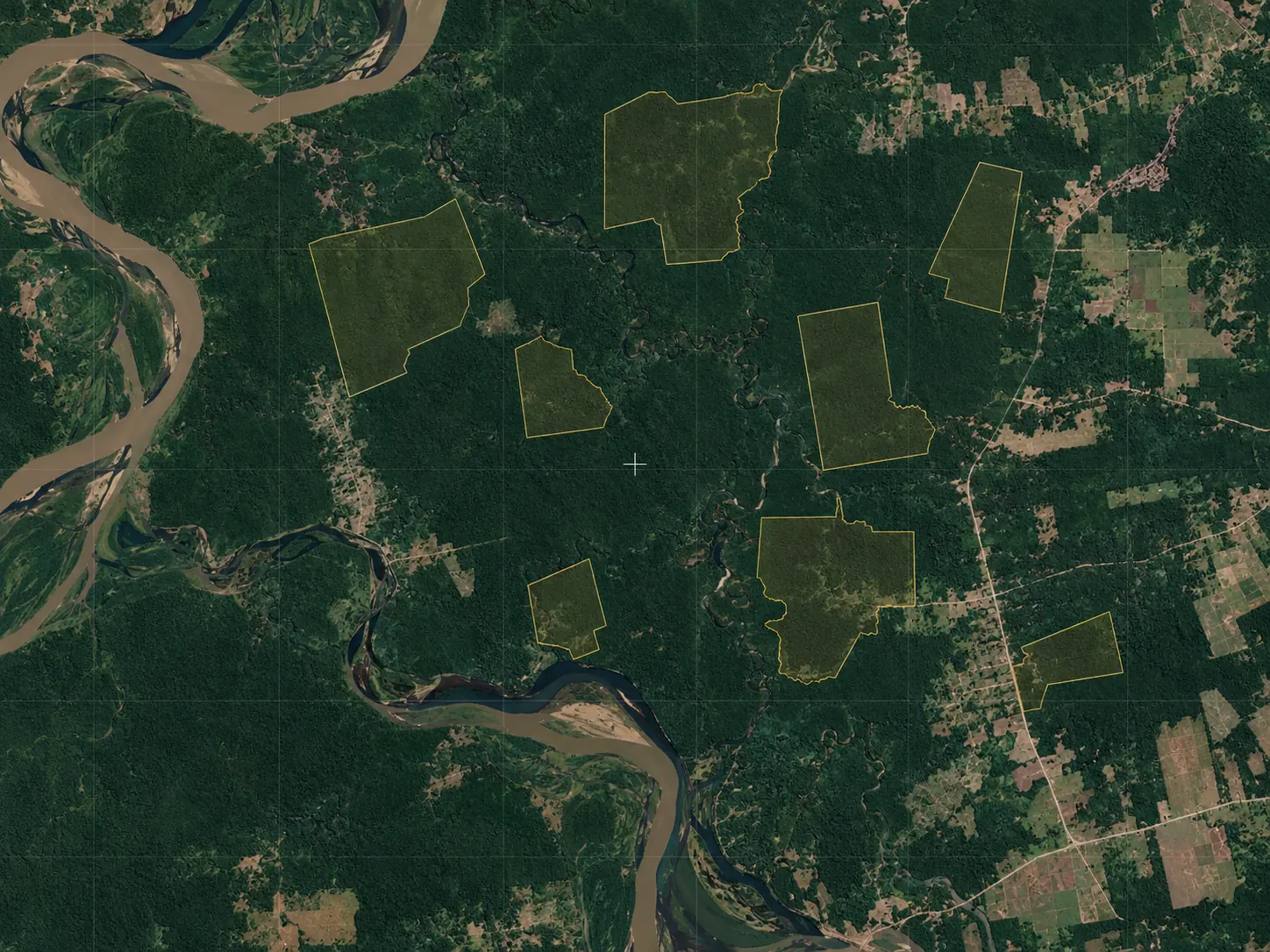
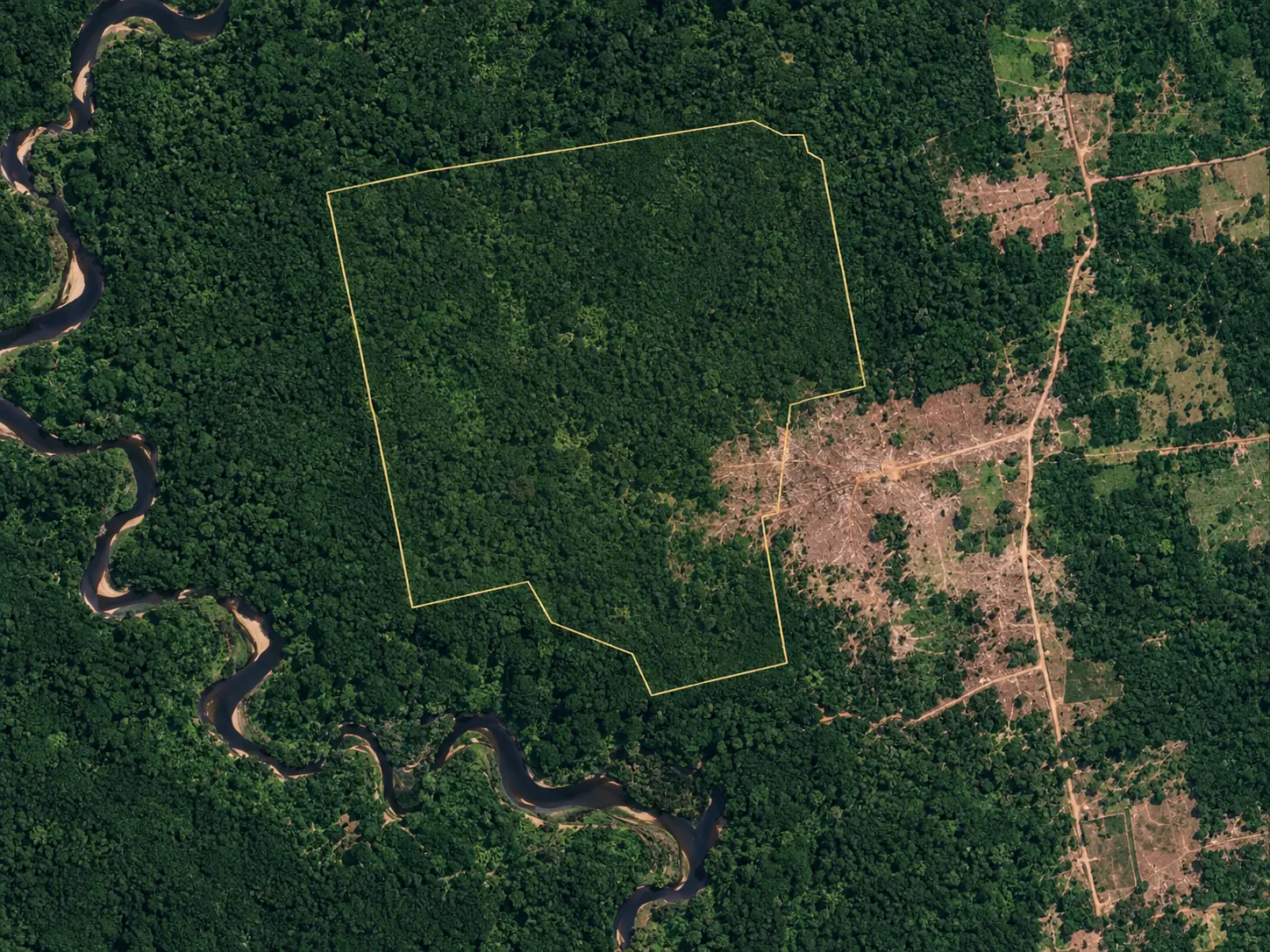
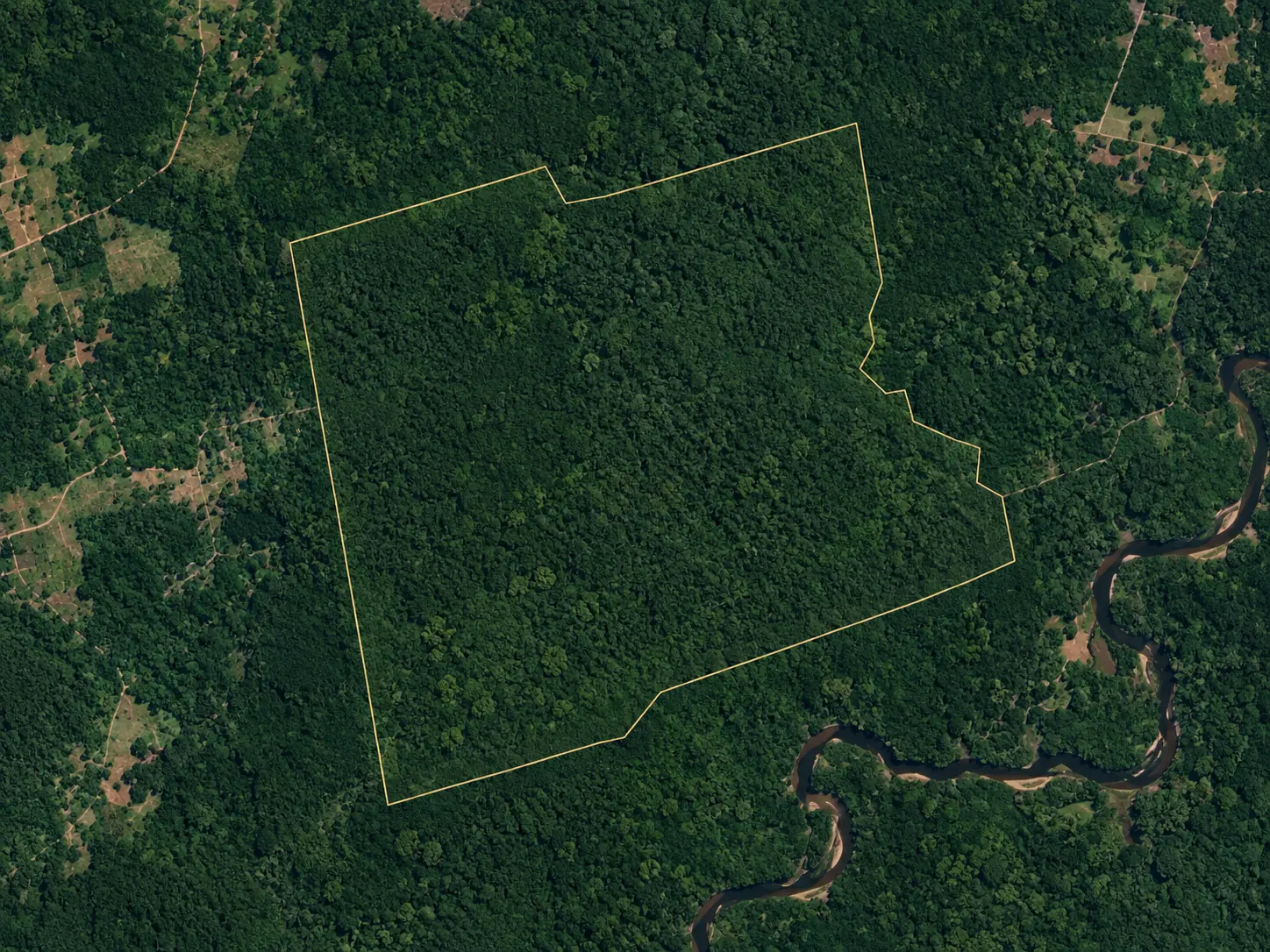
Sample visualisation; no live satellite or plot data.
The tools you need to determine your role, the country risk, the timber species and the geolocation. Free to use; the premium layer and the portal are part of the platform.
Are you an operator, trader or downstream operator? A few questions give you your role and the obligations that come with it.
Start the Role Finder → Free · PremiumEUDR risk level and obligations per country on the map. Premium: the full country profile covering governance, legality and deforestation, as a PDF.
Open the map → FreeMore than 500 timber species with trade names, IUCN status, CITES appendix and EUDR risk. No registration required.
Look up a species → FreeConvert coordinates, KML or faulty supplier files into a single valid GeoJSON that TRACES accepts.
Open the tool → With accountDue diligence per purchase order in one shared environment: client, agent and supplier provide information, geolocation and documents.
Sign in → FreeWhich other EU rules apply to your business? A roadmap of 29 EU regulations and a two-minute check.
Start the check →Timber and timber products (including chapters 44, 47, 48 and 94 of the CN) may only be placed on the EU market or exported if they meet three conditions. For those who already worked under the EUTR, the main novelty is geolocation per plot.
No deforestation or forest degradation on the plots of production after the cut-off date of 31 December 2020.
In accordance with the legislation of the country of production: land use rights, environmental and forest rules, third-party rights, labour law, taxes and customs.
The operator submits a due diligence statement (DDS) via TRACES, supported by information, risk assessment and risk mitigation (Art. 9 to 11).
Timber is the most complex EUDR commodity: long chains, multiple transformations, hundreds of species and a paper trail in four languages.
A sawmill in Vietnam is not an origin. The DDS asks for the plot where the timber was harvested; processing and trade documents do not prove that.
Trade names often cover several botanical species. We check CITES status, substitution risk per lot and the relevance of IUCN data.
FSC, PEFC and OLB certificates have an expiry date and a scope. "Certified" in an email is not proof.
Z coordinates, local projections, GeometryCollections or open rings: most supplier GeoJSON needs correcting before submission.
The EU country benchmark is a starting point. Corruption (CPI), law enforcement and sector-specific risks determine which documents you need per country.
During an inspection, the competent authority wants to see the full trail: information, assessment and mitigation per order, retrievable.
Four steps that together cover the full due diligence system of Art. 8 to 11. Each step is a tool; together they form a single file.
A decision tree based on Regulation 2025/2650 determines your role in the chain and the obligations that follow from it.
Country risk according to the EU benchmark (Implementing Regulation 2025/1093), supplemented with indicators that make the difference for timber.
Geodata is validated and converted into a TRACES-compliant format; each plot is then tested against its condition on 31 December 2020, using forest data from JRC and Global Forest Watch.
The order risk analysis combines country risk, supplier and certificate, the documents received and the satellite result into a substantiated conclusion.
For each plot we set the JRC forest map for 2020 (Global Forest Cover 2020) against annual forest loss from Hansen Global Forest Change and the deforestation alerts from Global Forest Watch, complemented by the SBTN natural forests map. A satellite image from the end of 2020 next to a recent image shows what changed on the plot.


Illustrative demonstration images; not actual or mutually comparable satellite imagery. Real checks are carried out on plot-specific source data.
Suppliers send KML, shapefiles, point coordinates or GeoJSON with errors. The GeoJSON Tool converts everything into a single valid file and shows each plot on the map, so you see the errors before customs does.
Each supplier and agent gets their certificates with scheme, number, scope and expiry date. The status follows live from the date; a click on the certificate number opens the public register (FSC, PEFC or OLB) for verification and time-stamped evidence.
Web portal in development Currently managed in your DDS file by Parallel 28.
For each order the platform generates a risk analysis in Word: general order information, satellite maps with narrative, the full supply chain from concession to exporter, the documents per legal category and the assessment of all Art. 10 criteria.
A platform automates the repetitive work. But whether a document proves the harvest location, whether a trade name hides a CITES species, whether a concession really exists: that takes someone who knows the trade.
One platform for your whole EUDR file: supplier portal, satellite check, mass balance, risk assessment and order summary. Choose a package based on your number of order lines per year; suppliers always take part free of charge.
Up to 50 order lines per year
Up to 100 order lines per year
Up to 250 order lines per year
Up to 500 order lines per year
Up to 1,000 order lines per year
More than 1,000 order lines per year
* Direct submission of your due diligence statement to TRACES via the API is included from Professional, as soon as the integration is available. Until then we prepare the file in TRACES format and you submit it via your own TRACES account. Prices excl. VAT.
Submit your due diligence statement directly from the order line; the reference and verification numbers are returned to the order automatically. Included from the Professional package.
The official EU forest/non-forest map (JRC Global Forest Cover 2020) as an extra layer in the deforestation check: was the plot forest on the cut-off date?
The same approach for packaging under Regulation (EU) 2025/40: inventory, supplier request, gap analysis and declaration of conformity. More about the PPWR platform →
30 December 2026 · large and medium-sized companies, and timber already covered by the EUTR.
Start today →Can't find your question? Ask us directly.
The EU Deforestation Regulation (Regulation (EU) 2023/1115) requires companies to demonstrate that cattle, cocoa, coffee, oil palm, rubber, soya and wood, and the products made from them, are deforestation-free and legally produced. For timber, it replaces the EUTR.
For large and medium-sized companies from 30 December 2026. Micro and small enterprises (status on 31 December 2024) have until 30 June 2027; for timber already covered by the EUTR, 30 December 2026 remains the date.
That depends on your position in the chain. Whoever is first to place the product on the EU market is the operator and submits the due diligence statement. Regulation 2025/2650 has greatly simplified the obligations for downstream operators and traders. The free Role Finder gives you your role in a few minutes.
The geolocation of all plots of production (polygons, or points for plots up to 4 ha), species and quantity, harvest period, and proof of legality: land use rights, harvesting and transport permits, tax and customs documents. We provide templates and check what you receive.
We test each plot against its condition on 31 December 2020 with open forest data from JRC and Global Forest Watch: the JRC Global Forest Cover 2020 map, annual forest loss from Hansen Global Forest Change, the GFW integrated deforestation alerts and the SBTN natural forests map, plus a satellite image from 2020 next to a recent one. The result is a narrative with maps for your file. Any anomalies are followed by a manual analysis.
Currently we prepare the complete file, including geodata in TRACES format, and you submit the statement via your own TRACES account. The direct API integration with TRACES NT is in development.
Our depth lies in timber and timber products: species, CITES, FSC/PEFC and complex chains. The role and country risk tools can be used for all seven commodities.
The basic tools are free. The EUDR platform works with packages based on the number of order lines per year: from Essential (€150 per month, up to 50 order lines) to Scale (€1,100 per month, up to 1,000 order lines); above that, Enterprise on quotation. A yearly subscription costs 11 months. Onboarding and training are invoiced separately. See Pricing.
A 30-minute call with no obligation. We look at your supply chain, show you the platform and discuss what you need before 30 December 2026.
Prefer to contact us directly? info@parallel28.eu · +32 471 34 62 61
A 30-minute call with no obligation. We look at your supply chain and show which parts of the platform are relevant to your organisation.
Book an introductory call via the contact formYour request is registered via our secure contact form on the homepage.